


To some, it is the defensive backbone of Western security and civilisation, the agency that quietly but effectively safeguards the liberal world order against the encroaching threat of totalitarianism. To others, it is the clandestine conspirator that sabotages, disrupts, and overthrows foreign governments, turning their countries into failed states and right-wing dictatorships. Yes, I’m talking about none other than the Central Intelligence Agency (CIA), the mere utterance of which sends shivers down many a spine.
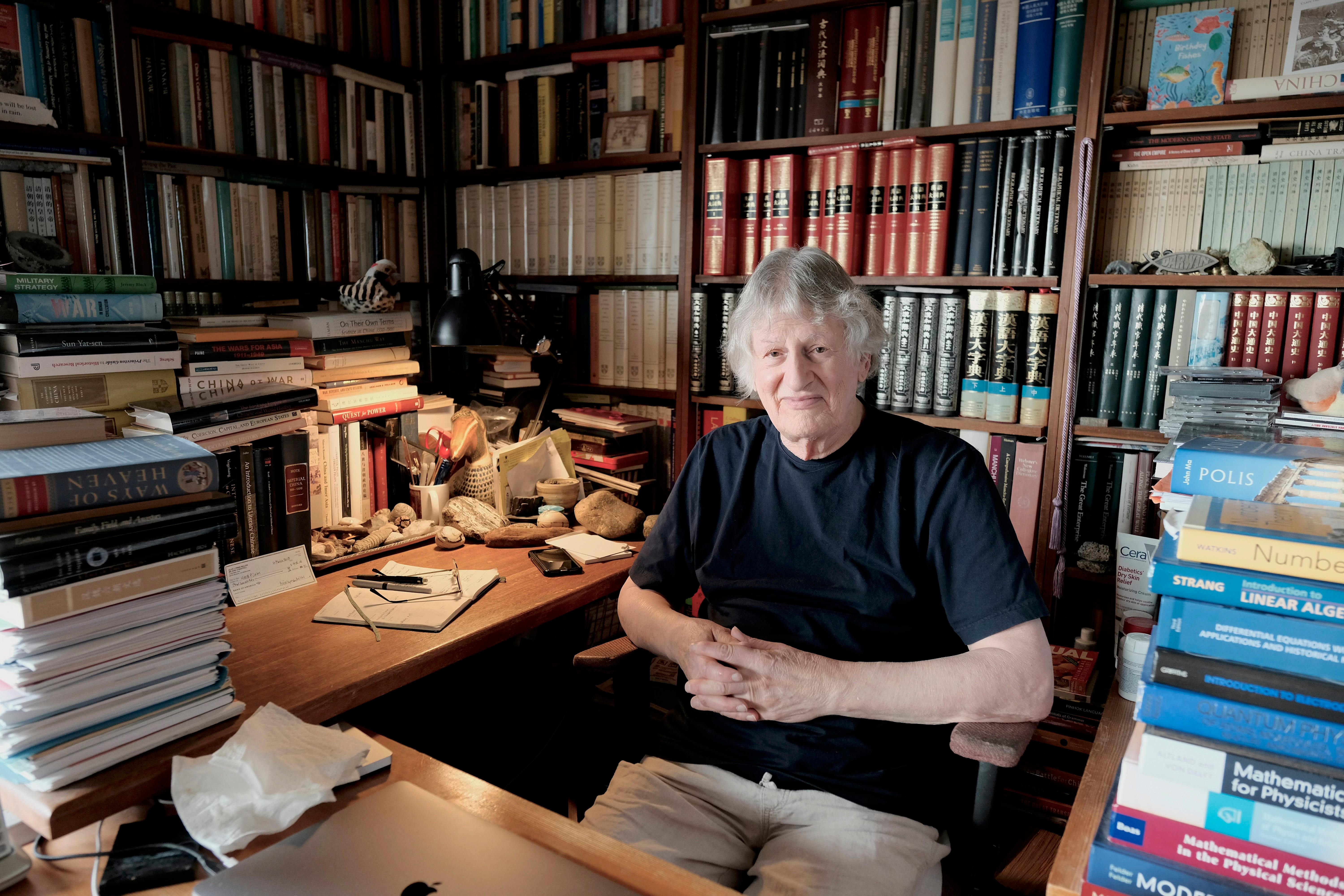
For most of the Cold War, the CIA focused on the Soviet Union and the Middle East. Yet, China gradually attained greater attention as the country exited its Maoist isolation under Deng’s Reform and Opening-Up. One of the CIA analysts tasked with following Chinese elite politics in the 1980s was Dr. Alice Miller, now a research fellow at the Hoover Institution and lecturer in East Asian studies at Stanford University. She previously taught at Johns Hopkins University, Georgetown University, and the Naval Postgraduate School.
Between 1974 and 1990, Dr. Miller worked at the CIA as a senior analyst in Chinese foreign policy and domestic politics and as division chief, supervising analysis on China, North Korea, Indochina, and Soviet policy in East Asia. She has edited and contributed to China Leadership Monitor at Hoover Institution since 2001. She was formerly H. Lyman Miller before her transition in 2006.
In this interview excerpt, which was edited for clarity and brevity, we cover her educational and professional life before and during her tenure at the CIA. Widely regarded as one of the most astute observers of Chinese elite politics in the United States, Dr. Miller struck me as humble, curious, and studious. She often goes into impressive detail describing events and her work, which is a real treat for the interviewer. I hope you will feel the same.
Enjoy.
For quick navigation to the specific sections:
‘I’m pretty sure people watched where I went’
Could you talk about your first trip to China?
I’ve only had one trip to the People’s Republic of China, in 1981. I worked for the better part of a summer in the U.S. Embassy. There was a program that rotated people from other parts of the U.S. government into the embassy so their foreign service officers could go on home leave. I was a political counselor for a couple of months. I got to talk to Chinese officials, but also got to just go around Beijing and visit other cities.
It was fascinating. In 1981, the country had just begun the agricultural reforms that gave families the right to lease out tracts of land. They could make their own planting decisions and then sell a lot of their produce in open markets.
People were starting to do things that had been suppressed for a long time. I remember colleagues in the embassy would find that their western fashion magazines would disappear for short periods of time. The Chinese would copy the fashions in the magazines and then quietly return them. Deng Xiaoping had authorized light industries to produce sewing machines. So people were starting to make their own clothes and no longer wear the old drab Mao suits.
… there was an understanding between the two governments that a certain number of people from the CIA could go, and Beijing knew who we all were.
It was a place that was coming alive. It was fun to watch.
Before you went to China, you already had experience researching Chinese history and politics.
I started learning Chinese in 1962, in my freshman year in college. I had spent a year in Taiwan, some time in Hong Kong, and a year in Japan, but had never gotten to the mainland. I spent 19 years studying a country that I couldn’t get to. It was quite moving to get to finally go.
At the time, your regular job was working for the CIA as a China analyst. Were there any sensitivities around going to Beijing? Was the government afraid, watching you?
No, there was an understanding between the two governments that a certain number of people from the CIA could go, and Beijing knew who we all were. On my first day, they searched my room and went through all my belongings. I expected that. I didn’t have anything sensitive anyway. I didn’t care. And I’m pretty sure people watched where I went in the city. Beijing in those days had, at all the major intersections, kiosks with policemen, and they could record who was going which way. But there wasn’t ever any real trouble. It was a good time in U.S.-China relations.
What kind of Chinese officials did you talk to?
I talked to people in the propaganda department and in the party school. I presented American positions at the foreign ministry, and talked to people at People’s Daily. In late June 1981, the sixth plenum of the 11th party congress was held, where the Central Committee passed a long reevaluation of Mao.
A colleague at the embassy and I asked to talk to People’s Daily about it after the communiqué came out. We got an appointment with the head of the theory section and we were prepared for a rather short and not very informative discussion, but instead we spent two hours there and blow by blow he went through how the resolution was put together and the meaning of certain parts. We were just shocked.
Gary, the guy I was with, said, “Do you mind if we take notes?” The theory section head said, “Oh, sure. Take notes.” So we took extensive notes. We were going to go back to the embassy and write up a cable to send to Washington on what we’d learned. But it was funny. The next day People’s Daily had a full page article that laid out all the same stuff. So he was just giving us a preview.
… my brother and I would go and play in the sand pit. My grandfather came by one day and said, “You know, if you dig a hole deep enough, you can get to China.”
‘Everybody spies on everybody’
Were there any pivotal childhood experiences that foreshadowed your interest in politics, in international relations, in China?
My father got called up during the Korean War. In our backyard there was this patch of sand where the grass wouldn’t grow. When my father was around, he told my brother and me not to dig in there. But we were little kids and wanted to dig. So when he went away for the war, naturally my brother and I would go and play in the sand pit. My grandfather came by one day and said, “You know, if you dig a hole deep enough, you can get to China.” I thought that was a wonderful idea.
There was a TV show called “Terry and The Pirates,” which was about two American commercial pilots who worked for a Chinese company flying airplanes. Their boss was a Chinese, whom I thought was the most fascinating figure because he was dressed in a traditional gown. This would’ve been in the 1930s or maybe ‘40s. The best part was that he would use a writing brush when keeping accounts. The show was essentially racist in its undertones. But it was fascinating.
And my parents had an encyclopedia. One of the first entries was for alphabets and different writing systems. They’d show examples of Chinese characters, and I said, “Gee, how do you get meaning out of that?”
Your father wanted you to study physics, ideally at MIT. You ended up going to Princeton and majored in Chinese history. Did you enjoy Princeton?
Yes, I did. I was a bit of an outsider — I didn’t go to a prep school. But intellectually it was just a fabulous place. There were great courses on almost everything taught by really good people.
I would call my parents up once a month to tell them I’m still alive. My father would usually answer the telephone and say, “Chinese studies, what are you going to do with that?”
Everybody had to satisfy two years of language requirement. I looked through the course catalog and said, “Oh, elementary Chinese, that’s interesting. I’ll try that.” That’s how I got started in Chinese — just curiosity.
By the end of my sophomore year, it was time to pick a major. I’d satisfied enough requirements to major in physics as I had originally planned, but I’d also been taking courses in Chinese history and language. It was so interesting that I decided, “I’m just going to do that.”
My father was disappointed I didn’t go to MIT, now he was disappointed I was going to study Chinese history. I would call my parents up once a month to tell them I’m still alive. My father would usually answer the telephone and say, “Chinese studies, what are you going to do with that?” I had no good answer for him. When I finally finished graduate school in 1974, I called up my parents and told them, “I finished and I got a job as an analyst for the CIA and it paid this amount of money.” My dad said, “Gee, China studies, great field. How’d you get into it?”
What was it like to be in college during the Vietnam War?
That time was tense. The call-ups for the army began in 1965. In our senior year, everybody had to think hard about what they’re going to do. Many people went to graduate school or law school or medical school, because they’d get a deferment. I thought I would probably go into the Navy to get my military service over. I figured I wouldn’t be fighting in Vietnam. I’d probably be sitting on a boat off the China shore listening to PLA radio broadcasts.
But I had injured my knees playing sports. I was rejected by the military. I knew I wasn’t going to be drafted about six weeks before graduation. I didn’t know what to do. I hadn’t applied to any graduate schools — I didn’t have the money. I went to talk to [Princeton professor Frederick] Mote and he said, “Well, let me talk to some people. How’d you like to work in Washington?”
A little while later I went down to Philadelphia and into an office building up on the eighth floor in a nondescript office with no name plaque, and it turned out I was meeting a CIA recruiter. For two years between my undergraduate years and graduate school I worked for the CIA as a translator.
Did you have reservations about joining the CIA? Now the CIA has the reputation of subverting foreign governments and destabilizing countries.
Not much of that was known in those days. There was a positive view of the CIA.
It’s a competition in international affairs. The basic rule of thumb is everybody spies on everybody.
When did it become controversial?
After the mid-‘70s, at the end of the Vietnam War. There was a lot of national criticism of the American involvement in Vietnam and a broader evaluation of American policies that got us into the war, and with that, criticism of the CIA. And, in 1975, there were Senate hearings which looked into what the CIA had done. It brought attention to coups in Iran and Guatemala and other activities, and gave the agency a much more negative reputation.
Some of it I don’t really apologize for. It’s a competition in international affairs. The basic rule of thumb is everybody spies on everybody. The U.S. and the Israelis have an agreement: we won’t spy on each other. Do you think the Israelis don’t spy on the United States? Don’t bet on it.
There are all sorts of things that I wouldn’t have favored — overthrowing the Iranian Shah, the coup in Guatemala in 1954. But on the other hand, there are things where, if the U.S. had power to change things in a positive direction, I don’t have a problem with it. And certainly China is trying to do things to influence the United States in subversive ways. It’s the real world.
And so after graduation, you worked for the CIA translating Chinese newspapers.
Red Guard newspapers, dazibao (posters with political messages), and things like that.
How did you get those?
Chinese people would collect all the newspapers into bundles and smuggle them into Hong Kong, and the agency’s agents in Hong Kong would buy them.
Did your work touch on the Vietnam War?
China was regarded as one of the big backers of North Vietnam. Also, this was still a period of containment against China. China was a ferocious enemy, and we had to understand what China was up to. They spent money to get any information they could. You have to remember that, at the time, there were no Americans in China to speak of. There were no diplomatic relations. American law said it was illegal for Americans to go to China.
There was the Hinton family.
Yeah, you can count those on one hand. William Hinton, Carmelita, and so forth. Edgar Snow went once in a while. But that’s pretty much it. So to understand what was going on in China, what the United States had was China’s media. There was a certain amount of diplomatic gossip that we could get in places like Japan and other countries who did have some people in China. And the main station was in Hong Kong, which was British in those days. They could talk to people who came into Hong Kong from the mainland to ask about what’s going on. And that’s pretty much it.
How the CIA dissected Chinese state media
You then went to graduate school, and afterward returned to the CIA to become a China analyst.
I finished my graduate work. My dissertation was on Manchu politics in the 1660s and ‘70s. And in those days the academic job market had dried up. I could find one-year jobs replacing professors on leave, but those would be in places that didn’t have a Chinese library. I was in Washington, I still had friends in the CIA, so I called up one friend, and he said, “Let me check out and see what’s available.” And I got hired, this time, to be an analyst.
It was the method used to analyze Soviet politics from the ‘20s, then during World War II to analyze German and Italian and Japanese media, and then, during the Cold War, all of the communist countries.
Was it difficult transitioning from academia to intelligence analysis?
No. I knew what it was like to work there. I had to learn the particular methods that we used to analyze, in my case, the Chinese media.
What’s the key methodological difference?
Because Chinese media are controlled by the party, the basic assumption is that what’s expressed in the media reflects the policies, attitudes, and approaches of the Communist Party leadership. By comparing what they say in one instance with similar instances in the past, you can see whether or not their treatment of that topic has changed. Then you figure out why it changed, and try to infer backwards, from what they say to what they think.
It was the method used to analyze Soviet politics from the ‘20s, then during World War II to analyze German and Italian and Japanese media, and then, during the Cold War, all of the communist countries.
What are the techniques, essentially? What are the tricks?
You need big files in order to compare how the treatment of any given topic changes over time. You need to know what they said before, and you need to know it accurately and comprehensively. You can’t just do it occasionally because you need to know the steps in between. We had files of leadership speeches of everybody down to provincial secretaries going back to 1949, and of People’s Daily editorials.
I can give you an example. In 1978, Guangming Ribao (Guangming Daily) published a special commentator article on the question of, “Practice is the sole criterion for truth.” It was a theoretical article that had no obvious application. But there it was on the front page, arguing on why practice has to be the criterion we use to sort out correct ideas from false ones. There was no obvious implication of that.
But then about three weeks later, Deng Xiaoping gave a speech at a conference, and he said, “How do we sort out good ideas from bad ones? We test them in practice, we take ’em out and try ’em out. And if they give good results, obviously it’s a good theory. And if they don’t, that’s a wrong theory and we discard it.” And he said, “We should apply this to Mao Zedong Thought.”
Hua Guofeng got up a couple days later and gave a different speech, and said, “Mao Zedong Thought can’t be cut up into pieces, keeping some parts and throwing the rest away. It has to be understood comprehensively and systematically.” So here we had the number one and number three leaders arguing opposite positions.
Over the rest of the months, down through the third plenum, which was in December ‘78, you could see different leaders publishing commentaries. You had this powerful split in the leadership.
Then finally, the third plenum met in December ‘78 and the plenum communiqué said that the central committee put a high premium on the discussion of practice as a sole criterion for testing truth, and said something like, “Mao Zedong never said he himself was entirely correct all the time.” That opened the way for a very different transformation of the party’s ideology that was the basis for reform. If you didn’t pay attention to the speeches and to the original articles that raised these things, you’d miss the entire argument. It could really tell you things.
That strikes me as quite similar to how the Chinese understand their own politics — analysis based on texts and tiny changes in speeches.
We always assumed that politically aware Chinese — or Russians in the Soviet Union, or East Germans in Germany — were aware how that system worked and read the media the same way. It’s a technique that transfers easily into reading your own media. Even in this country, the media are not state-controlled, but they do reflect particular interests and outlooks. It’s a method that can be broadened and it’s quite useful.
Alexander George, a Stanford political scientist during World War II, worked in that same unit. He wrote a book afterward comparing the analysis that he and others had done during the war with the diaries of Joseph Goebbels, the German propaganda czar, and discovered a quite high correlation between what the analysts thought and what the Germans were thinking about.
Did anyone ever check the analysis against diaries and memoirs of Chinese officials?
Yes, I used to do that. Often it would affirm what we thought, but it would supply more details, which you couldn’t possibly know by reading the newspaper.
State Department lawyers in the mid-‘90s said that because China had joined the Berne Convention on copyright protection in 1993, we could no longer publicly circulate information from Chinese media…
Old-school open-source intelligence
So nowadays this would be called open-source intelligence.
That’s exactly what it was. It’s a method that has been used for decades. People don’t do it so much these days in government. The unit that I worked in doesn’t exist anymore.
State Department lawyers in the mid-‘90s said that because China had joined the Berne Convention on copyright protection in 1993, we could no longer publicly circulate information from Chinese media because it was copyrighted now and protected. That was one problem. We could still do it internally.
And policymakers decided that this is something that anybody can do. You don’t have to be rigorous about it and we don’t need translators, because we have Google Translate and so forth. It’s a mistake in my opinion.
At the time there were also scholars who were reading Chinese newspapers.
Everybody who was studying contemporary China used pretty much the same methods. The big advantage was that the institution that I worked for, part of the agency called Foreign Broadcast Information Service, FBIS, translated virtually anything that was of interest to American policy and so forth, and published it in a daily publication called The Daily Report. There were eight of these for different regions of the world, and they were usually 70 or 80 pages long, five days a week, that had translations of anything that might conceivably be of interest. We also transcribed transmissions from China in Xinhua English, for example, or Beijing radio broadcasts in English.
It was comprehensive and it was publicly available, and so all the people in universities used it. If you go back and read the footnotes in academic works on Chinese politics and foreign policy, you’ll see they constantly cited Foreign Broadcast Information Service, Daily Report, such and such a date, page such and such.
What was considered of interest? I presume the FBIS did not translate everything in newspapers.
Anything that was of foreign policy or military interest; Chinese political affairs down to even local levels, depending on the situation; economic information; not so much cultural information, it didn’t seem to be that politically relevant unless there was a controversy, like Hai Rui Baguan. People would be interested not so much in the play itself, but rather why people were arguing about it.
What was the curation process?
That was the biggest part of FBIS. We had about 10 or 12 field bureaus around the world that collected media information from virtually every part of the world. Those bureaus had a staff of linguists who translated the languages that we were receiving back into English, a staff of editors who would go through to make sure the translations were smooth enough, and then it would all come back and be published in The Daily Report.
The unit I was in was called the analysis group, and it was a much smaller unit of 30 to 35 people total who analyzed all of the communist countries. There were four or five of us on China, a lot more on the Soviet Union.
… there were three that monitored China: One in Okinawa, Japan, one in Seoul, Korea, and one in Bangkok, Thailand. Okinawa did most of the stuff on China.
There were central main analytical offices. Their work was to analyze Chinese politics or Chinese foreign policy using all the available sources. And that would be not just propaganda analysis, but also diplomatic gossip, whatever spies could find out, and other means such as electronic and satellite surveillance pictures. We were one component.
The curators were really the editors, who assembled The Daily Report or monitored the selection of stuff that got translated in the field bureaus. We provided regular input on what was important and what wasn’t from the broader interests of Washington.
Where was the field bureau? In Taiwan?
No, there were three that monitored China: One in Okinawa, Japan, one in Seoul, Korea, and one in Bangkok, Thailand. Okinawa did most of the stuff on China. The one in Bangkok did some of the broadcasts to Southeast Asian insurgencies that were supported by China — the Voice of the People of Thailand, the Voice of the Malayan Revolution, things like that.
We eventually had a bureau in Hong Kong. They would listen to the radio and TV broadcasts and so forth, and translate what was interesting or useful, and then telegraph it back into Washington.
These field offices, I presume, are embedded within the consulates?
Not necessarily. But they were there under agreement with the host government. And there was also a division of labor with the BBC. That went back to World War II and just continued all the way through the Cold War. They had a translation unit.
When China opened up, did that sort of material gathering job then move to the Beijing Embassy?
None of it was done in China.
It seems easier to do it in China.
Maybe. But it was already established in those places. It would be expensive to move and the same degree of cooperation couldn’t necessarily be counted on with Beijing.
Would The Daily Report be sent to your department?
No. We got the copies of the original transmitted material before The Daily Report was assembled. The Daily Report went out to anybody who wanted it. You could subscribe publicly to it, but it also went all across the government.
So you guys got it quicker than everyone else. And you made an analysis of it. And then who was the audience?
Everybody in the government who wanted it. It went to the State Department, it went to the Pentagon, it went to NSC, everybody who’s interested.
How important overall was the Foreign Broadcasting Information Service?
It’s critical. A very high percentage of what we actually knew about what was going on in China was the open source intelligence. That’s still true, I’m pretty sure.
I talked to the Soviet analysts all the time, because I thought the Soviet experience was really useful in understanding how China worked, and they were interested in what we were doing.
One of the problems today is there’s no more FBIS. So people have lost touch with this very basic stream of information that can tell you a lot if you pay attention.
Did the CIA try to recruit Chinese sources?
Oh, sure. And the Chinese try to recruit American sources. Everybody spies on everybody. It’s silly to think they don’t.
Because for a Chinese person, maybe you would go to dinner and lunch with whoever and this sort of thing is always in the background, the names and the suspicions. They’re not necessarily right, but you have a hunch. But if you’re just getting all of this purely from texts and reports, it’s hard to make sense of it all.
But all that background information, rumors, and so forth, this xiaodao xiaoxi (unofficial news), was available. It was collected by diplomats. And, in 1977 or ‘78, Hong Kong began to publish journals on Chinese affairs, Zhengming (Testimonial) and Qishi Niandai (The Seventies). The reporters would go to China to collect all those rumors and publish them. Most of it you couldn’t do much with.
Most of it’s probably rubbish.
It was. It took a while for people to discover that and some people never really did.
Could you describe the culture at the CIA?
Our office was very liberal. The ‘72 election was Nixon versus McGovern, a liberal candidate. In an office of about 35 people, I think 33 voted for McGovern.
I talked to the Soviet analysts all the time, because I thought the Soviet experience was really useful in understanding how China worked, and they were interested in what we were doing. We’d collaborate on articles on relations between Moscow and Beijing.
It was a wonderful place to work, and it was intense, because we got this steady stream of information coming in to work with, and you tried to keep up. It made it hard to take vacations because if you went away for a week, you had to read all that material.
Decoding China’s fast-changing ‘80s
It must have been an eventful time: Cultural Revolution, the Gang of Four, the rise of Hua Guofeng, the purge of Hua Guofeng, normalization of relations with Jimmy Carter. What were you doing and looking at during that period?
Just what Chinese leaders and Xinhua, People’s Daily said about trends in U.S.-China relations. Leaders would give speeches and it was important to take those speeches apart and figure out what was new and what they are reaffirming, those kinds of things. It was exciting. Those were really interesting times.
Did you ever look back and see how well the analysis at the time stood up?
Not systematically. But we got a lot of things right. It was, and I think was for a long time, the best source of information. There wasn’t any question about the authenticity of it. The Chinese themselves were putting it out. So you didn’t have to wonder, “Why are they telling us this? Why is this person passing on sensitive information? Can you believe them?” There were no questions like that. In the case of Chinese media, they’re their media. It was a method that was quite productive and often accurate.
Did you play any role in the normalization of relations during the Jimmy Carter administration?
Very indirectly, our office produced a stream of analysis on trends in U.S.-China relations that was fed into the NSC.
Did the NSC give you assignments?
They would tell us, “We’re interested in anything you find about this or that.” I recall Mike Oksenberg, the China person at NSC, used to come out to the headquarters of the agency and several of us would all have lunch with him and he’d talk about stuff they were interested in and what we should look for.
Did your work change after the normalization of relations?
Not very much. China and its leadership and the direction of its foreign policy was still something we were very interested in. There was a period of strong convergence of the U.S. and China on international affairs. But in the spring of 1981, the foreign minister, Huang Hua, gave a speech in which he no longer talked about all the areas in common with the United States. He talked about all the areas in conflict, and where we disagreed.
It was a shift in tone. Soon after that, Beijing began to move a little bit away from the United States, and move a little bit toward the Soviet Union. They announced the independent foreign policy line, which was a fundamental change in orientation in foreign policy, and it was signaled by these differences that we could analyze in Chinese speeches.
Did you spend the entire ‘80s working for the agency?
From ‘87 to ‘89 I was on a sabbatical. The agency had a program for what they called exceptional analysts to take some time off and work on a special project. I applied for that and got a two-year sabbatical. I was interested in the tension between Chinese scientists and the regime. This was before Fang Lizhi and people like him began to emerge, but I could already see some of these tensions arising. I used to read a journal that nobody in his right mind would read, called Ziran Bianzhengfa Tongxun — the Bulletin on Natural Dialectics.
That sounds so boring.
It was terribly boring. Guangming Ribao used to publish the tables of contents of academic journals, and I noticed they published the table of contents for the newest issue of Ziran Bianzhengfa Tongxun and I thought, “Oh, that’s interesting.”
… when they finally did on June 3rd, 4th, I wasn’t surprised. It was appalling, just horrible. But you could see it coming.
I could just fill out a form, and it would go to the embassy’s publication procurement officer, and they would start sending it in. This was ‘87 or ‘86. It published every two months. In my spare time I started looking through it and started noticing articles that were implicitly critical of the regime, and that discussed the need for science to be free to explore without intrusion of party doctrines. Marxism claims to be the science of human affairs, and the queen of sciences that should guide everybody else in their research. But some scientists began to say, “That’s not right. Science should be free to explore.” More and more articles started to appear about this.
I applied for this sabbatical to work on that. I spent two years, until the spring of ‘89, and produced a long report that I submitted as part of the project that later became the basis for my first book, published in ‘96, called Science and Dissent in Post-Mao China.
What was your reaction when students began to protest in Tiananmen?
I was on sabbatical writing my book. I’d have CNN on all day long and they would have regular reports from Tiananmen Square. I’d go work for a while and come and look at CNN to find out what was going on. It seemed pretty obvious to me after a while that the regime would order the PLA to impose order. And so when they finally did on June 3rd, 4th, I wasn’t surprised. It was appalling, just horrible. But you could see it coming.
The whole ‘80s in China was such a dynamic, liberal era.
It was a fascinating time. I was a historian and so naturally I got all the history journals that I could from China. I noticed that journals began to publish articles on the Qin Shi Huang emperor. They would argue that while Qin Shi Huang unified China, he also made mistakes. (Qin Shi Huang was China’s first emperor. He was widely considered a tyrant.)
And then, what really got me interested: People’s Daily, on page two, which was the op-ed page in those days, had a little article that says, “We need to take a ‘one divides into two’ approach to Qin Shi Huangdi.”
Now, why in the world would the Communist Party Central Committee newspaper carry an article about Qin Shi Huang? Anybody would know they’re talking about Mao Zedong. So I wrote an analysis report on these historical articles that were preparing the ground for the party’s explicit discussion of Mao’s contributions and his mistakes that came into the 1981 history resolution.
It was all tremendously exciting. And the most challenging part was, you just have to have a solid background on what happened before to understand what’s happening now, especially in that transitional period from the death of Mao down to say, the 1982 12th party congress. Because so many people were brought back from earlier times, and if you didn’t know who they were or why they were purged to begin with…
When they launched the household responsibility system in ‘78, it was very useful to know — and a lot of people didn’t know — that same system had been used in 1961, ‘62 to try to recover from the Great Leap Forward. There was a political history to that kind of a policy. If you weren’t aware of that, you couldn’t understand what was going on, and you had to spend a lot of time reading material from earlier periods.
To me that sounds like an incredibly difficult thing to do.
For me, the Chinese leadership and also relations with the Soviet Union, those were the two topics that I was focused on. There was a division of labor among people who worked on China, and those were the areas that I worked on.
Relations with the Soviet Union were always really interesting. For me, intellectually, it was fascinating because you have two secretive systems interacting with each other in the ‘80s that were antagonistic, but they were working toward some kind of improvement in relations. And one of the enlightened policies of the agency was that if you could get permission from your supervisor, they’d give you free Russian lessons. I went and took Russian lessons so I could read Pravda, Izvestia, and Krasnaya Zvezda.
You got that good?
I needed a dictionary ready. So I could read both sides, and I talked to the Soviet analysts a lot. I shared an office with one who worked on Soviet leadership. That was really interesting, especially after Gorbachev came to power in March ‘85. It was just fascinating. It was a good job.
I resigned in June 1990 because I applied for and was given Doak Barnett’s job at Johns Hopkins SAIS. I originally thought I wanted to be an academic when I was in graduate school, so this was a chance. It was a good position.
It wasn’t an easy decision to become a full-time academic. I was going to be teaching about contemporary China based on all the work I’d done in the agency and the stuff I’d learned there. But I went to the school library to see what sort of Chinese publications they had. They did have a subscription to People’s Daily, but it came after six months by mail. It was going to be very different trying to understand what was going on in China now compared to what I was doing in the agency.
Recommended reads
Alexander George, 1973, Propaganda Analysis, Greenwood Press
Deng Xiaoping, 1978, Practice Is The Only Criterion For Testing Truth
Alice Miller, 1996, Science and Dissent in Post-Mao China, University of Washington Press
The Stanford Pride Oral History Project’s interview with Alice Miller
About us
The Peking Hotel podcast and newsletter are digital publications in which Liu He interviews China specialists about their first-hand experiences and observations from decades past. The project grew out of Liu’s research at Hoover Institution collecting oral history of China experts living in the U.S. Their stories are a reminder of what China used to be and what it is capable of becoming.
We also have a Chinese-language Substack. We hope to publish more conversations like this one, so stay tuned!
Shoutout!
We would like to say thank-you to our supporters, especially to the following people who referred us to great many friends, colleagues and acquaintances:
Kudos to you, our network now has more awesome people like yourselves. Please keep spreading the word for us :) I appreciate it.


